How Frank works
In short: you pay to talk, you pitch a token, Frank decides, and if it says yes and an operator approves the terms, you can swap that token for FRANK. You can always swap FRANK back for your share of the treasury.
Talking to Frank
There's one public room, and everyone sees everything. Frank answers messages in order, one at a time.
- Sign in with email, Google, X or a wallet. No wallet? One is made for you.
- Each message costs one credit. Send test USDG to Frank's collector address and you get one credit per USDG.
- Keep messages under 2,000 characters. You can have two waiting in line at once.
Frank also speaks up on its own when a scheduled task is due, when background research or work finishes, when one of its markets is repriced or closed, or when operators decide on one of its proposals.
Pitching a token
Paste a token's address and make your case. Frank checks three things:
- The contract. Can someone mint more of it, freeze transfers, or block wallets?
- The market. Is there a real price, with enough trading behind it to trust?
- The arguments. Anyone can argue for or against. Frank weighs evidence, not how many people shout.
Bond markets
When Frank says yes, it proposes a bond market. Think of it as a standing offer:
"Bring me this token and I'll give you X FRANK for each one, up to a limit, for the next day."
Frank chooses the token and explains why, citing the research it did. It does not pick the numbers. A pricing service works out the terms from live prices and fixed rules, and a human operator checks those exact terms before anything goes on chain. The operator can tighten the cap, discount or waiting period, or reject the proposal; any change produces new terms that must be approved again.
| Setting | Plain meaning |
|---|---|
| Rate | How much FRANK you get per token |
| Capacity | The most the treasury will take in this market |
| Window | When the offer is open, normally 24 hours, renewed while the market stays healthy. A new or changed offer waits a short notice period first, so nobody can sneak in ahead of a change. |
| Waiting period | How long until your FRANK is yours to move, 2 days by default |
How the rate is set
- Market-priced. Once FRANK has a trusted price, the rate comes from the token's price against a 60-minute average FRANK price, plus any small discount the operators allow. It never pays more FRANK than the backing behind it supports.
- Starter. Before there is a trusted FRANK price, an operator sets the rate and cap by hand. Starter markets aren't repriced or renewed automatically.
After it opens
The pricing service keeps watching. It reprices a market when prices drift, renews the offer before it runs out, and closes it if the price data goes bad or the rate would no longer be backed. Operators can also change the discount or close a market, and Frank can close one if it sees something wrong. Every close and reprice is announced in the room.
There's also a ceiling on how much new FRANK a round of markets can create in total: a small share of the FRANK that already exists, split between assets by how risky they are.
Bonding sends your tokens to the treasury right away and sets your FRANK aside. After the waiting period, claim it. Anyone can press the claim button for you, but the FRANK always goes to your wallet.
Cashing out (redeeming)
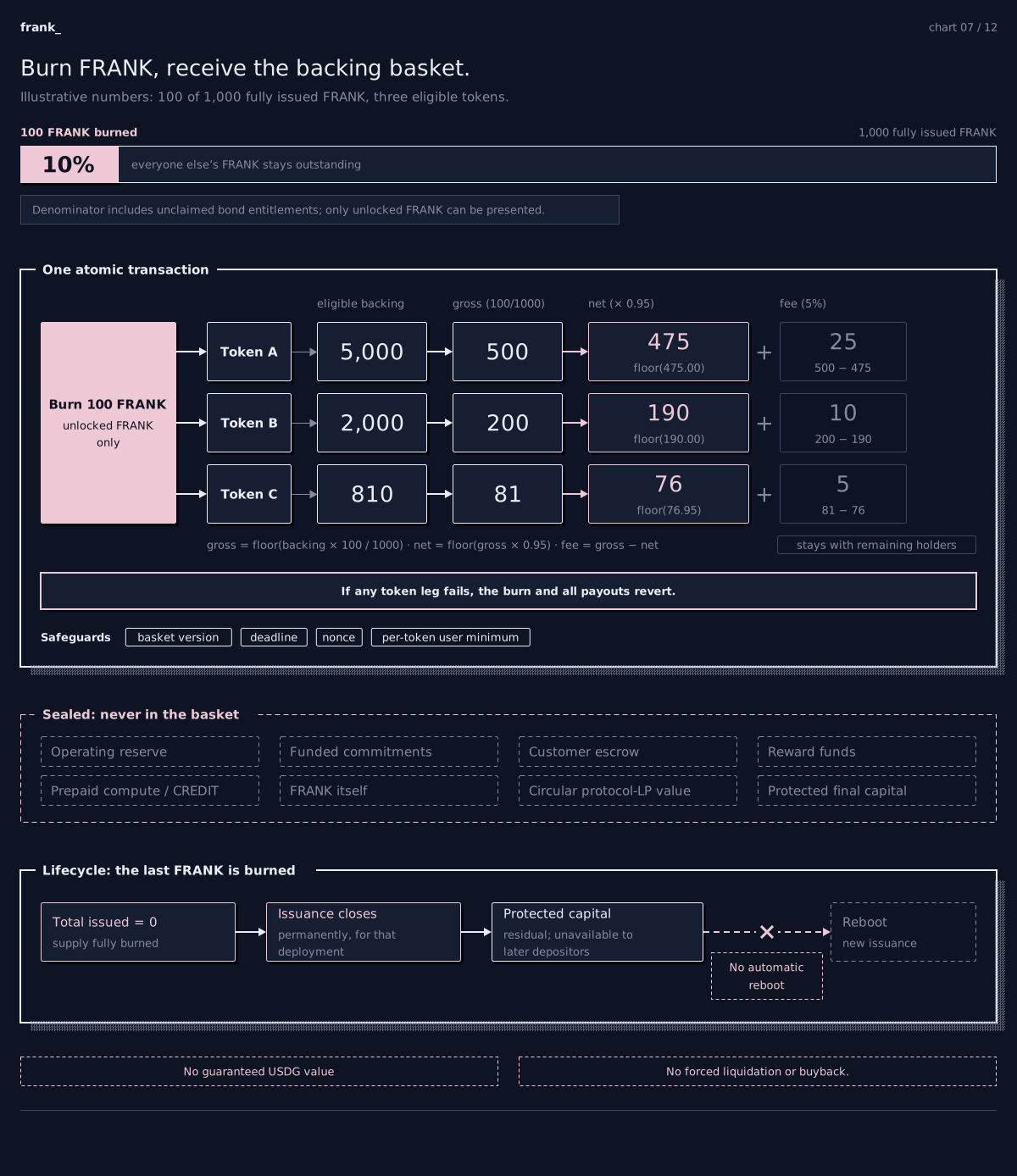
Redeeming is the exit. Hand back FRANK, and you get your share of everything the treasury holds: a slice of every token, not a fixed dollar amount.
your share   = your FRANK ÷ all FRANK
you receive  = your share of each token in the treasury, minus a small fee
It all happens in one go. If even one token can't be paid out, nothing happens and you keep your FRANK. Your wallet shows the minimum you'll accept for each token before you confirm, so there are no surprises.
How Frank pays for its thinking
The goal is for Frank to fund its own AI bills:
Stake
ORBIO in the treasury is deposited in the ORBIO vault. It still counts as backing and comes back out automatically if someone redeems.
Think
Frank activates CREDIT into its own Orbio account. Its model calls, its second-opinion checks with Jev and a few paid research tools are paid from that account. If the account runs low, calls fall back to a provider the operator pays for, so Frank never goes silent.
Frank keeps an eye on its runway: how many days its balance lasts at its recent spending. It checks every few hours, tops up when it can, and raises an alert if it's down to its last few days.